
Beyond uptime: turning data centre customer experience into competitive advantage
7 min read 7 May 2026
Data centres are no longer judged solely on power, uptime, and resilience. They underpin mission‑critical services across every sector. As a result, customer expectations now mirror those seen in other mature infrastructure and technology markets.
Customers increasingly expect seamless onboarding, proactive and consistent communication, transparency across the asset lifecycle, and a commercial relationship built on partnership rather than transactions. Uptime remains essential, but just that is no longer sufficient.
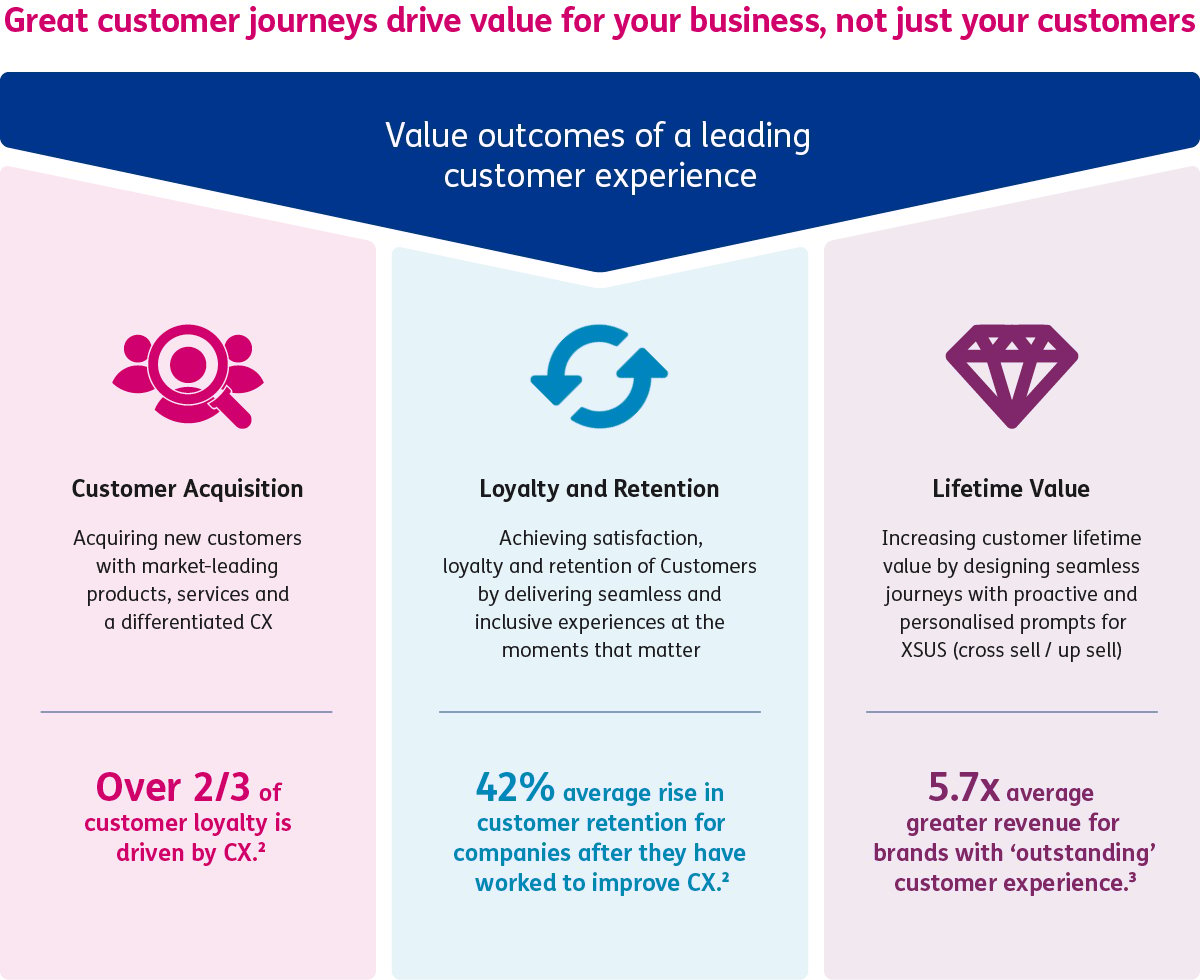
Customer experience (CX) has therefore become a source of measurable commercial advantage. Operators delivering profitable growth are those that recognise CX not as a cost to be contained, but as a driver of trust, customer lifetime value, retention, and expansion. Where experience is poor, friction increases, deal cycles slow, and value leaks over time.
This article explores why CX now matters in data centres, how it links directly to commercial and operational outcomes, and what leading operators are doing differently to convert technical strengths into long‑term customer value.
10 truths about customer experience in data centres
- The data‑centre industry is shifting from a capacity‑led utility model to a mission‑critical services ecosystem. Customer expectations increasingly resemble those found in mature digital infrastructure sectors.
- Customer experience is no longer a soft differentiator. It directly influences trust, deal velocity, retention, and customer lifetime value.
- Regulatory pressure, particularly in financial services, has fundamentally reshaped expectations. Continuous assurance, transparency, and audit‑ready information now matter as much as uptime.
- The growth of high‑density compute and AI workloads is increasing operational complexity. Customers demand richer visibility, faster communication, and clearer evidence of resilience.
- Customer needs are diverging across segments. Operators must deliver differentiated experiences rather than rely on a single, standardised service model.
- Operational resilience and customer experience are inseparable. Incident communication, governance, and accountability shape trust as much as technical recovery.
- Customers increasingly expect long‑term partnership. They look to providers to support planning, growth, optimisation, and future‑focused decision‑making across the asset lifecycle.
- Leading operators embed CX into their operating model, culture, and data foundations. They do not treat it as a front‑office overlay.
- Customer experience is now measurable and commercially material. It has clear links to procurement speed, renewal rates, expansion, and margin protection.
- Customer experience does not replace the fundamental sources of advantage in data centres. It determines how effectively those advantages are converted into trust, retention, and long‑term value.
From uptime to proof: the new customer expectation
Data‑centre customers, particularly financial‑services firms, cloud providers, and global enterprises, operate under significantly higher regulatory and compliance expectations than in the past. Frameworks such as DORA and ISO 27001 have raised the bar well beyond basic service availability.
Customers increasingly expect rigorous, auditable evidence that controls across power, capacity, and security are not only in place, but operating effectively. Resilience must be demonstrable. Proof now matters as much as performance.
As a result, providers are expected to deliver more than secure and resilient facilities. They must offer transparent, reliable, and compliance‑ready information that demonstrates operational discipline and control maturity. The ability to evidence resilience has become a core element of the customer experience.
This shift creates a new CX challenge. Customers are no longer satisfied with periodic reporting or reactive assurance during audits. They expect continuous confidence. Operators that can proactively provide structured reporting, real‑time visibility, and audit‑ready documentation position themselves as strategic partners rather than vendors. In doing so, they reduce customer effort, accelerate audits, and strengthen trust.
Leading operators are already responding by embedding trust and transparency directly into the customer experience. Models that provide self‑service access to security, resilience, and compliance artefacts set a benchmark for assurance as an ongoing capability rather than a one‑off exercise.
Those unable to meet these expectations face slower deal cycles, higher customer friction, and reduced competitiveness, particularly in heavily regulated sectors. For many customers, the quality, accessibility, and timeliness of operational data now rivals technical performance as a buying and retention criterion.
Complexity, AI, and rising expectations
Emerging technologies are materially increasing operational complexity. High‑density compute driven by AI workloads and next‑generation cloud platforms place unprecedented demands on power, cooling, and redundancy. The financial and operational consequences of disruption are far greater than in traditional colocation environments.
Customers running these workloads require granular visibility into capacity, thermal performance, and failure domains. They also expect faster, clearer, and more precise communication during incidents. Static reporting and generic status updates are no longer sufficient.
These expectations increasingly mirror those set by hyperscale cloud platforms, where customers have on‑demand access to compliance reports and control attestations. As workloads move fluidly between cloud and colocation, customers bring these standards with them. The baseline for what “good” looks like has risen.
Operators that fail to meet these expectations risk being perceived as slow, even when their underlying technical performance is strong. In this environment, experience gaps quickly translate into commercial risk.
One market, vastly different customers
Data‑centre customers are far from homogeneous. Their priorities continue to diverge as business models, regulatory exposure, and technical requirements evolve.
Hyperscalers typically prioritise scale, efficiency, and standardisation. They value rapid deployment, predictable performance, and seamless integration with their own automation and monitoring tools.
Financial‑services organisations place greater emphasis on resilience, auditability, and governance. They often require bespoke reporting, tighter service‑level agreements, and rigorous change control.
Enterprise and digital‑native organisations tend to seek flexibility and collaboration. They value the ability to co‑design solutions, adapt capacity over time, and align infrastructure decisions with evolving digital strategies.
Meeting these varied expectations requires differentiated experiences across the portfolio. A single, uniform service model struggles to serve all segments equally well. Leading operators balance consistency and scalability with tailored engagement models, reporting, and service design aligned to distinct customer needs.
Customer experience and operational resilience are inseparable
In a data‑centre environment, customer experience is defined by how effectively incidents are managed, changes are communicated, and risks are mitigated. Customers judge operators not just on outcomes, but on the clarity, speed, and consistency of communication during critical events.
Even when technical recovery is successful, poor communication or fragmented ownership can significantly erode trust. As reliance on digital infrastructure deepens, tolerance for uncertainty has sharply declined.
A resilient operation must also feel resilient from the customer’s perspective. That means timely updates, clear post‑incident reviews, and visible evidence of learning and improvement. Increasingly, customers expect structured resilience frameworks and predefined communication protocols to be embedded in contracts from the outset.
The strongest operators treat incidents as moments to reinforce confidence rather than damage it. When handled with transparency and professionalism, disruption can strengthen relationships. Operational resilience and customer experience are two sides of the same coin, both grounded in predictability, accountability, and trust.
From service providers to strategic partners
The perception of data centres as static, utility‑like facilities is fading. Customers increasingly expect providers that deliver value across the full lifecycle, not just uptime and power efficiency. They want partners who understand their business objectives, anticipate future needs, and actively support growth and transformation.
In practice, however, many buying decisions remain procurement‑led and risk‑driven. Standardised RFPs and commercial gating criteria often limit experience‑led differentiation at the point of sale. As a result, partnership creates its greatest value after contract signature, in how change is managed, risks are surfaced, and relationships evolve beyond minimum contractual obligations.
This shifts the focus of customer experience from transactions to outcomes. The question is no longer whether services are delivered, but whether they enable customers to operate, scale, and comply with confidence.
Leading operators increasingly structure the customer experience around four core stages:
- Onboarding excellence: frictionless provisioning, clear timelines, and transparent communication that accelerate time‑to‑value.
- Capacity planning and growth alignment: proactive forecasting and scenario modelling that support customer strategy and reduce operational risk.
- Performance reviews and continuous improvement: insight‑led, outcome‑focused conversations that move beyond service metrics.
- Future‑focused advisory: informed dialogue on emerging technologies, sustainability, and regulatory change.
This evolution requires more than account‑management changes. It demands cultural and operational shift. Success is no longer measured solely by uptime or efficiency metrics, but by the depth, quality, and effectiveness of customer engagement over time.
Operators that invest in relationship‑led models, supported by robust data, predictive insight, and flexible commercial structures, are better positioned to differentiate in an increasingly commoditised market. Over time, these organisations move the data centre from being perceived as a cost to be managed to an enabler of customer growth and resilience.
What data‑centre leaders should focus on next
As customer expectations continue to rise, data‑centre leaders face a clear set of decisions. Technical excellence remains essential, but it is no longer the primary source of differentiation. The question is how effectively operational strengths are translated into confidence, trust, and long‑term value for customers.
Four priorities stand out.
- Clarify customer strategy: Operators need a clear view of who their customers are, how their needs differ, and which segments drive the greatest value. This requires explicit choices about where to differentiate, where to standardise, and how experience is delivered across the customer lifecycle.
- Strengthen experience measurement: Customer experience must be measured using a combination of customer sentiment and operational indicators. This allows leaders to understand not just whether services are delivered, but whether the experience works as intended for each customer segment.
- Build robust data foundations: Consistent data frameworks and high‑quality reporting are now central to the customer experience. Transparency, assurance, and actionable insight depend on reliable data that can support continuous confidence, not just periodic reporting.
- Align technology to experience outcomes: Technology choices should be driven by their ability to support resilience, integration, and scalable experience delivery. Tools that improve visibility, communication, and audit readiness increasingly shape customer perceptions as much as physical infrastructure does.
Taken together, these priorities reflect a broader shift. Customer experience is no longer an overlay on operations. It is a core mechanism through which data‑centre operators convert resilience, scale, and capability into commercial value.
In a market where infrastructure is increasingly commoditised, the leaders will be those that make the experience of working with their organisation as resilient, transparent, and predictable as the services they provide.
Get in touch if you would like Baringa to help you to unlock measurable customer and commercial value through a leading Data Centre customer experience.
Sources:
Earn Customer Loyalty With the Right Technology (1)
50 Stats That Prove The Value Of Customer Experience (2)
Top 35+ Customer Experience Statistics To Know in 2024 (3)
Security Compliance Management - AWS Artifact - AWS (4)
Trust and Transparency Dashboard | Equinix Product Documentation (5)
Our Experts


Related Insights

Bridge the gap between Telco and Techco with AI-driven customer experience
Telcos face commoditisation, product convergence and rapid tech disruption, pushing them to rethink their future role beyond traditional connectivity.
Read more
Achieving operational excellence through automation and AI across your processes
Telecoms providers face a core challenge: with products becoming commoditised and pricing power limited, revenue growth is increasingly difficult to achieve.
Read more
From telco to techco: Why telecoms must transform for a new era
The telecoms industry is facing an existential moment. As traditional models come under increasing pressure, telecoms companies must evolve beyond their traditional role as connectivity providers and reposition themselves as techcos.
Read moreRelated Client Stories

Turning vendor complexity into advantage for a global QSR brand
How a global QSR brand unified procurement and vendor management across 1,000+ suppliers—driving efficiency, cost savings and stronger growth.
Read more
Scaling a US personal care brand for digital-first growth
How we helped a leading consumer brand move beyond retail and grow online channels to 30% of total revenue.
Read more
Building the digital engine for a global high-street coffee brand
How we built a scalable digital engine for a global coffee brand—launching app, subscription and loyalty to drive rapid growth.
Read more
Consumer market leader: unlocking millions in value with intelligent procurement
How a global leader transformed procurement with an intelligent sourcing platform to boost speed, efficiency and savings.
Read moreIs digital and AI delivering what your business needs?
Digital and AI can solve your toughest challenges and elevate your business performance. But success isn’t always straightforward. Where can you unlock opportunity? And what does it take to set the foundation for lasting success?
 Keep up to date
 Our industry insights
 Strategic insights