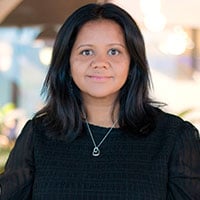
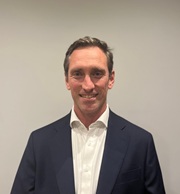
Mansi Welcome to the rise of the COO podcast, where we explore what it really takes to succeed in one of the most demanding roles in business today. Our conversation today is whose job is it anyway? And I suspect many COOs will immediately both be intrigued and also understand why we're asking that question. As the role continues to evolve, knowing who owns what and how leaders work together when those boundaries aren't clear is becoming increasingly important. I'm joined today by Jason Lloyd, who has recently stepped into a COO role and brings a unique perspective on both what that transition really feels like, as well as our headline topic. Jason, thank you so much for joining me.
Jason Thank you very much for having me, Mansi, and hello.
Mansi Jason, I'd love to start our conversation today by allowing our audience to understand a little bit about your career journey to date, where you work today and what motivated you to take on a COO role there.
Jason Of course. So Mansi, I must have spent about two decades now in global banking, originally started in South Africa many moons ago, moved to London about 20 years ago, have largely been working in the investment banking enablement functions, so transformation projects, operations, controls, business management type functions. I've always been naturally drawn from a young age to really understanding how things work and that goes to business as well and how they work. So what makes one business successful? Terms of how it operates and another not. So I work at ICBC Standard Bank which is an emerging markets investment bank focused very heavily on commodities as well as the emerging markets, fixed income and effects. It's a very interesting place to work as you can imagine with our heritage being half South African of Chinese. It is a very interestingly culturally diverse place to be and there is a lot of challenge, a lot business opportunity, a lot things to grapple with on a day-to-day basis. In terms of what attracted me to the COO role, I think the short answer is the ability to influence the wider organization, that end to end nature of the role, and also the fact that it is inherently about how things work, how does a business work, what is it in a business across people, process, platform, data that makes that business successful and makes it operate. So for me, that has always been my natural inclination and something that I'm intrigued by. And that's how I found myself on this path as the CEO of ICBC Standard.
Mansi Now you've had some time in the position, what would you say surprised you most?
Jason Um, I think what surprised me most, and it shouldn't have, but it did, was the amount of time that I've spent aligning that interconnection point again, how much time it takes to align stakeholders is that quantum of alignment and the amount of time it take. I don't want to say I underestimated it, but I think it surprised me just how much of an effort that has taken to align, particularly with those major challenges that frankly all of those key challenges in organizations, the defining ones, they are ones that span. Across an organization and touch multiple different areas of an organization, and you don't typically get that single unique owner. It's multiple owners that kind of all touch on those different things. I think that for me has probably been the one thing that surprised me the most.
Mansi Well, it's gonna be really interesting to have that conversation today because I think it's in those overlaps and those boundaries where so many things can either be created for greatness or things can slip through the cracks as well. So we'll explore that in a moment, but perhaps just because we get the pleasure of having you quite early in post as you've become a COO quite recently, it'd be great to just hear some reflections on looking back. What did you think the role would be before you stepped into it, and how has the reality of that compared if I'm allowed to ask that cheeky question?
Jason Course you are, it's your podcast. So from my perspective, I think, you know, coming into it, I was very focused and felt very strongly, you know, success would be defined by delivery and execution and making sure that what you said you were going to deliver is what got delivered and motivating your team and getting your team aligned to that. And while that's naturally important I think certainly for me getting into that alignment point and how do you create clarity from the multitude of different agendas and almost clarity from the chaos. How do you align people and how do you make sure that what people are working on is genuinely important and genuinely what's gonna move the organization forward? And that for me, I think maybe that comparison for me is I've shifted certainly it's creating the environment as opposed to the delivery and the executions and spending more time as I alluded to earlier on that how do connect the dots and get people to kind of align and create that right environment for people to succeed as opposed to just, that's what we're after, deliver that project.
Mansi And how does it feel to let go of some of what you either were doing or thought the role was to step into that role?
Jason It's certainly unsettling, I can tell you that much from my background. Letting go of certain things and that feeling of loss of control sometimes can be a little bit unsettling and take a little of getting used to, but at the same time, it's hugely interesting, hugely interesting to focus on the dynamic of how do you align people? How do you influence people to kind of coalesce around the importance of a particular topic or issue that's foundational to the firm and then motivate them to to move in that direction collectively because it is an influence thing as opposed to a directive thing where you can simply sit and say okay guys you report to me let's focus on this so for me that definitely has been the lesson and obviously you do that as you move through senior roles but it's certainly the coo the breadth of it for me has been has been a piece that it's that level of influence and collaboration is is It's definitely something that you need to focus on a lot.
Mansi And has it prompted you to think about what kind of COO you would like to be and want to be?
Jason Um, yeah, I think is the honest answer. I think for me, and sorry if it sounds a little bit cliched, but I'm one of those people who likes to believe you should leave something in a better state than when you found it and from an organizational standpoint, that's important to me. And then you kind of start to think, but what does it actually mean? And for me it's about two things. It's about clarity and accountability. And those two components for me is how can I create an environment and a culture where you have clarity of purpose and every there's a space in in an environment in which Clarity can be obtained and accountability can be obtained. The people are very clear. This is mine. This is what I need to do. This is my part of the process. And that for me is, you know, if I could do anything, I'd like to be able to say I can leave behind one day, hopefully not too soon, but one day a more resilient organization than the one I found. And that doesn't just mean in the technical sense, but it means in the cultural, broader sense of the firm that collectively the people, the processes, the platform are more resilient, more capable, more flexible. And more adaptable to the world as it evolves around us.
Mansi Yeah, well, I love that answer and response and can only hope that more and more people in leadership roles adopt that mindset as well. I think it's so important just to ensure the working world continues with such a strong ethos as well, so I commend you on that for sure. Now, one of the things you've alluded to a couple of times, even just in this opening intro section, has been around the breadth of the role. And our headline feature for point of class is, well, whose job is it anyway? I guess there's something about the fact that you've stepped into this role that perhaps allows me to ask the question, which is when you stepped into the role, was it clear what your executive responsibilities were? And in that breadth of different functions you interact with, where your roles and responsibilities stop and others begin.
Jason So I think in my mind, were my roles and responsibilities clear? Yes, absolutely. And that's, I suppose, one of the luxuries of the SMF regime in banking. But at the same time, I think it's fair to say the boundary of accountability and how you deliver on those responsibilities is, is the complete opposite. It's utterly blurred. And if you think about it, those key challenges, those defining challenges that we're dealing with. They span the whole organization across the executive suite. And there's numerous examples, whether you look at it through the lens of operational resilience, if you look it through the lense of customer outcomes and who supports a customer, if you're looking at it through the lens AI adoption and emerging technologies, all of those things are relevant from a COO standpoint. They are part of your responsibility, but you can quite clearly see that the accountability spans the whole organization and making sure that the whole organizations is in a position to react to those things. That, for me, is my point that I made right at the outset around that ability to interconnect and create those connections with the other C-suite executives to make sure that when I talk about resilience, I'm not just looking at my world, I am considering how do I build that for the whole organization and how do you deliver that in the risk function and the finance function and the technology function. Because really, in my lesson that I've learned, which shouldn't have been as illuminating as it was was. This really for me success is going to be defined by the extent to which I can successfully collaborate with my peer group. That for me is what it's going to about because if I don't get that right I might have a very resilient vertical component underneath me but the rest of the organization will left behind.
Mansi And what she think is a risk directly linked to the rest of the organization being left behind. What's most at risk here?
Jason I think in that construct of those blurred boundaries, for me, it's accountability and consequently delivery. Those two things suffer and all the risks that stem from it, whether it's lack of resilience or poor systems or poor controls, whatever it is, it stems from those two things. I think if you can't get that clear accountability as to who is doing what, that naturally just impacts on the delivery and the ability to clearly articulate this is what needs to be done. And this is who is responsible for doing it, when it needs to be done by, and working together and collaborating with people. For me, those are the two things that naturally suffer and leads to a lot of wheels spinning in an organization where lots of people are trying very hard and they are very well-meaning, but the effort doesn't equal an outcome. You have lots of effort, but a lot wasted effort, if I can describe it like that, but not a lot delivery.
Mansi And so you've stepped into this role, Jason, at a time where AI is not new, but it has accelerated really quickly. And it's by no means from all the discussions we've had through the COO network, of course, any form of silver bullet, but I was keen to understand, has AI made the boundary between technology and business leadership harder to define?
Jason Without question, in my view. And it's obviously emerging and evolving as we go. But my sense when I step back and look at it is AI has taken decision-making. If you look at a traditional kind of investment bank or banking environment, what AI is doing in my views, it's taking that decision- making away from the traditional governance structures that these companies have created for themselves in order to make sure that delegated authority flows up and down kind of vertically through an organization. AI has completely turned that on its head in terms of... Where and how decisions are made and you're effectively empowering a machine for lack of a better description to be making those decisions. For me you look at the nature of those decisions and when done well from an AI standpoint and when properly conceived of and implemented you really are talking about strategy, risk appetite, customer outcomes and engagement and those are not technology risks, those are business risks and that's you need to make sure that you have that collective accountability and responsibility at the executive layer, an awareness of what is happening in the firm and where those decisions are made. And I think for me, that has massively blurred and continues to blur the boundary between technology and business, because it's no longer a world of business tell technology what they want, technology build it, business use it. You can literally now, business can, in simple natural language, begin building applications and building solutions for themselves in that procreation type. Environment and that for me is it's hugely exciting and promising as a buyer of a technology service for many years obviously being frustrated when you wait and have to wait for things that are built properly so there's a huge amount of opportunity and excitement but there's naturally a lot of risks that come with that and that blurred boundary of who owns what and who decides what and how do you make sure that it's properly overseen and managed is a natural challenge and one of the key challenges that spans the at the moment.
Mansi And how are you handling it?
Jason With difficulty is probably the most honest answer. I'm treading very cautiously and I think that's important. I think the nature of our organization, the nature about business and our clients is one that I think we're afforded that opportunity. I think, we can step cautiously through it, seek to identify what are the areas of genuine value? Where can we create value for this, for our customers, for ourselves? How do we then implement that? What skills do you need to implement that because there's a lot of new engineering, new technology, new business skills required. Do we have those skills? And then to go after and be more intentional about what we're doing. There is a real danger if you just open the floodgates and say to everyone, here's a whole raft of toys, do whatever you want. My point I was making earlier about doing everything and doing nothing well, I think there's a real dangerous of that and you chew up a lot of technology time, a lot business time and also take a lot risk. So for me, consciously trying to be and I'm certainly trying to drive in the organization intentionality and just conscious thought about what are the opportunities? What are the benefits of that? What are the controls and the things we need to think about? And then going after those intentionally and saying, okay, this is right for our organization. This is a relevant use case. Let's think about that and implement that. So that's been the strategy and learning every day would be the honest answer.
Mansi Yes. Oh, I love that honesty. And, you know, I think it's probably reassuring to say consistently here that most of the COOs I engage don't want to slow anything down. Do you want to innovate and explore, but at the same time make sure that there's quite a measured approach taken to change that is both enduring and beneficial for their organizations, which again shines through in how you've articulated that. Now, AI often features as a big topic, and it is clearly a big topic, but I was keen to just also understand what responsibilities do you think are increasingly becoming the COO's problem to solve beyond AI?
Jason I think for me, when I reflected on it in preparing for this podcast, there were two things that just kept coming back, two themes that I just kept coming back to. The first was resilience, but not in the normal regulatory sense of it, but really in the organizational foundations, because we've touched on AI and we've spoken about resilience a little bit in the operational resilience sense, really what that boils down to is the foundations of the organization, the data, the platforms, the facilities, the people. That you rely on and depend on to run your company. And for me, that is probably one of the biggest focus areas and biggest challenges that the COO role has is to make sure that those foundations are robust and solid. And if you extend the example on AI as an example, AI is wonderful, but it's utterly ineffective if the data that you're feeding into it is not well-managed, is not high quality, is not understood. So, building those foundations, making sure that they're strong, for me is probably the biggest challenge because certainly in legacy institutions, all the big banks that have built themselves over many decades, it's a huge uplift to make sure that the underlying foundations are adequate and appropriate to leverage some of the technologies that are available and that they are resilient and robust. And the second thing I would say is that connection point and that interconnectedness and that again, ties to the same theme of resilience, but to identify where those foundations are. Intersections of those foundational components and how they work and whether they are robust. I think for me those are the two big problems is making sure that intersection that connect the role works and that the foundations are robust and where they aren't shining a light on that and sponsoring motivating for influencing that the foundations get the requisite amount of investment so that all the nice stuff that sits on the top like AI can work effectively and you can really leverage it and benefit from it. That's certainly from my perspective anyway.
Mansi That's such an insightful set of answers, Jason. One of the things I've observed over the last two years in conversations with our COOs has been that exact orchestrator role that is both needed and required to execute complex change across organizations and also as a consultant, it's one of the thing I see clients grapple with most. So it's great to see as such a feature of what you think is required and the way in which doing that well will help drive change across the organization as well. I want to just make sure we also touch on a few things for you personally, Jason. So what advice can I ask you to give someone who might be doing what you're doing right now, which is stepping into their first COO role?
Jason Always dangerous to be offering someone advice only six months in, Menci, but I'll do my best.
Mansi Is when you're fresh here.
Jason Exactly, exactly. I think from my perspective, I would say don't underestimate the importance of those relationships, the time that you need to spend and invest. It is an investment in those C-suite relationships because of the nature of the role that you are going to fulfill as a COO. You need to have strength, trust established that people trust you, they listen to you, they seek your counsel and your advice, particularly on things that potentially are not that familiar to them. And I think that spending that time investing in those relationships is really important. And then the other thing, which certainly when you come from a career background like mine is always a shock to the system is to accept the ambiguity. It was one of the things my predecessor said to me, and she was very clear, you should become comfortable in the world of the uncertain and the ambiguous. And you obviously have a lot of that in, and I had a lot that in my career, but the level, the change in that level of ambiguity that comes with the role and the incomplete information. Unclear kind of transparency as to who's accountable for this or multiple people accountable and then being able to deliver. I think for me it's really about creating that clarity and being comfortable in the ambiguity, having good relationships and trusting people and having them trust you. I thing that for me is that's key to then being to create that clarity and that accountability is still what's happening. My advice would be spend as much time as you can with those people to build those relationships and build that trust because it will stand you in good said.
Mansi Great advice for sure. Now another cheeky question, if you were offered the role again today knowing what you know now, would you still take it?
Jason Absolutely, there's no doubt it's one of the most challenging roles in my opinion in an organization and I'm not just saying that because I happen to be doing it. It's also from my perspective one of the most rewarding to have the opportunity to shape an organization and to have that end-to-end visibility and ability to influence. For me if you are interested and excited about how a company works, whether that's technology, people, process, product, client. It is just such an interesting place to be. The ability to deal with cutting edge technology as it evolves, changes in marketplaces, changes in clients, the ability to help and shape the culture of a firm, for me is just hugely fascinating and hugely interesting. And I am just naturally a person who gets bored quite quickly. So the fact that I know with absolute certainty, no two days will ever be the same. It's very liberating because I know I can come in and I know there's always something to do and there's something new. So for me, I wouldn't hesitate to take the job again. It's easily the most interesting and challenging thing I've ever done in my career.
Mansi Well, I think they're both lucky to have you and I think you are brilliant for the role as well. Jason, thank you so much for joining us today and for such an honest conversation and just, I guess, the fresh eyes through which you've shared some of your insights today. There have been a number of things that have really stood out for me. Firstly, just some of the speed with which you had to acclimatize into the role. Nothing fully prepares you for the nature of the role I think that's probably a common thread and theme that I've picked up consistently from other COOs, but it's great just to hear your particular experience. I love just that sense of accountability that you feel in that role, both in terms of outcomes for the organization holistically that you describe, rather than just vertically in an area, but also for just leaving the organization in a better place than where you found it. So really wonderful having this conversation. Thank you again for joining us.
Jason Absolute pleasure. Thank you so much again for inviting me and having me.
Mansi Also a huge thank you to everyone who's been listening today and if you enjoyed this episode of The Rise of the COO please do subscribe and join us for our next conversation. Until next time.