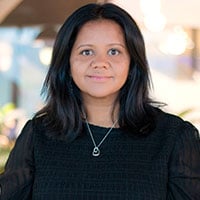
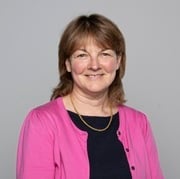
Mansi Welcome to The Rise of the COO, the series where we explore what it really takes to operate and make decisions at the heart of complex organizations. Today, we're talking about the decisions COOs carry every day, balancing outcome, resources, money, risk, time and quality, often with imperfect information and very real consequences. I'm delighted to welcome Angela to join me today from Cancer Research UK. Welcome Angela.
Angela Thank you, Mansi. I'm Angela. I am Chief Operating Officer at Cancer Research UK. I've been here for five years. Today I'm responsible for tech, data, HR and transformation. You can add AI in there as well because clearly it sits there. I've recently handed over finance and general counsel to our new CFO because we've split my role into two so that we can increase the capability of our executive. And I can focus much more on the changes that we need to make as well as running the organization.
Mansi Well, I'm really looking forward to our conversation today. It's always fascinating to speak to someone in a leadership position like yourself, who's going through some kind of role change and difference as well, because you really get to the heart of some of the things that are changing as well as how some of those decisions are being made. Now, before we deep dive into the topic, I'd love to just hear a little bit about and look back on your career and some of experiences that have most shaped how you now approach decision-making as a COO.
Angela I go back to my very, very first part of my career, where I started as a graduate in a software company, and I got my initial training as being a business analyst and then a project manager. And I use those skills still every day in most things that I do. That ability to look at and solve problems, to understand requirements and work out how to get the best solution out of them. And then to work away to how do you move that through to delivery. So they're two foundations that I live for. And as I've developed through my career, I have done numerous transformations and numerous implementations and things. And that whole thing about the risk basis of the decision that you make that enables you to move forward on that migration or implementation is something that I always look and go to. Was that a good risk-based decision in hindsight, or was it a bad risk- based decision in hindsight? And I think those have taught me again, how I can make mature risk assessments as we move forward. That would be the things that I would look at.
Mansi It's great that you can point quite clearly to some of those foundational components. Now, across the range of your career and the time of it, I guess what we've seen is the world evolve and change. And I perhaps feel that decision-making feels far more complex as COOs today than it might've done earlier in your career. Can you tell me a little bit about that? Oh, yes.
Angela I mean, if you look at the world we live in today, and you look at the channels that we have, the solutions that have the options we have available to us to move forward to make decisions on is so much more vast than it was in the days of a single solution or a single system that stood alone that created that outcome. So every decision that you have to make, you've got to look at so many different things. If you're talking to an audience, you're not just talking to them through a telephone, which is what we did in direct line to start with, because that was a direct line and it was a telephone and that was where that world started. You've got a social media site, you got a website, you have got a telephone. You have got so many channels that you are talking to, so every time you are implementing a change or something, you go to look to the audience and where they are talking you through. The complexity of the world that we engage with people. Both work and home now is much greater than it was, and AI is only now accelerating that even more.
Mansi Yes and you know some of what you've just shared there really resonates with me because in periods of the past there has been a real gravitation towards I need more information and data and now there's so much of it it's all what's the insight from it to then make some of those decisions as well. Now you and I have chatted offline a little as well in advance of this session and I love this phrase that you talked about which is the COO's mental decision equation. I'd love you just to share with this audience a little bit about how you describe that so we can probe into that a little today if that's okay.
Angela So for me, it's an equation that doesn't, it's not a written down equation, it's a mental equation of how I go about making decisions and informing the decisions, so that I can make sure I've considered most of the components as possible. So my mental thing is that for the outcomes that you're looking for, what are the things that we need to consider? What are the resources that we will be required, the investments that would be needed, the risk level that we're prepared to take? The time that we've got available to do the work, and finally, what level of quality are we looking for the outcome? And that you have to do is say, how am I going to balance those? Because I know that actually, the more quality I want, the longer the time I've got, I might not have all that time. So therefore, do I need to put more resources in to get the quality up? Or can I not afford those resources? Because I don't have the budget to do those resources. And how do I make all of those components balance in the best way to reach the best quality of outcome for that point in time. And it's sort of like a juggling in my brain that I go through to try and assess and understand and then communicate the assumptions that you make about those things, because only by getting people to understand the assumptions you've made, can you then learn that actually those assumptions may not be right in that case. So it's sort of a juggling of. Different components.
Mansi Which I can entirely understand because there's so many different components, people in the COO role are continuously juggling with all the various inputs coming as well. Now Angela, is there maybe an example you can share with us just to bring to life how you use this mental decision equation in the day to day.
Angela I think it's, if you're going, like if I'm going to get, we're going to go live with a piece of software and you're, you're looking at the, the, the test data that you've come out and you've gone, actually we've failed on five of the components and actually can, to fix all five ahead of going live is going to take us beyond the time we want to go life. What, where are you going to can't bring more resources in because you haven't got any more people to bring in. So what are you going to do that's going to say I'm prepared to take the risk of three of them not working from day one? What am I going to put in place to mitigate that from day one so that on day one I've got I know I can still understand and take the business function not ideally but then after day one I'm going to spend the time to get a life so I meet my time deadline. So those are sort of balance equations that you spend your time. Understand with people what are those options and the things that enable you to do that.
Mansi Great. And obviously in your role, people are looking at you for decision-making, often at speed. When you're sitting with some of those complex, difficult decisions, how do you personally sense check that it's good enough to move forward, even when it's imperfect? The risk.
Angela So life is about managing risk, what's your job? I'm a fundamentally, I'm risk manager, because my job is to manage the risk, the risk of changing and the risk have not changed. And so all of the equation is about the outcome that you want and the risk you're prepared to take to get to that outcome. And so the component, the other component. So I literally will assess the thing through the risk lens of the components that I've got and go, is that an acceptable level of risk for us to take as an organization to get that outcome? And how do you communicate that, back outwards? Clearly, if possible, with the assumptions, and let's go back to you, it's very astute to be the assumptions that you're making and being clear that those assumptions are, if you're going to leave a put a manual workaround in or you're not going to get something, make sure that people understand that. Make sure that it's clear to people that that is what the outcome of what you're gonna make. Because they might say, I don't want you to do that, and you go, okay, so you don't me to do it. Then we have to go back and we have look at what other levers we can put in our equation. To enable us to get to a different outcome.
Mansi Where do you think the tension is hardest for CIOs to hold, particularly when you are balancing the risk, the speed and quality in what you're trying to deliver as an outcome? I think ultimately quality.
Angela Because actually, often quality is the tangible thing, because you can always improve quality at a later point. And so, but it's the thing that people hold dear to them to start with. And so that's the hardest thing for people to really understand that actually by letting go of some quality, you might actually get somewhere quicker or be able to do what you want to do because you're going to always go back. And often you might find that the quality you hold onto now as you go forward isn't actually quality that you value going later.
Mansi I think that's often what I see because the quality is anchored to the business of now.
Angela And that's the thing I think that is the hardest thing for people to let go of.
Mansi Maybe I'll ask you if it's okay to share an example where in aiming for the highest possible quality at the wrong moment you've actually ended up in your experience with an outcome that wasn't the desirable one?
Angela Simple examples, but they sort of are very easy traps to fall into. So one is, when you're building a solution, and you want to categorize a set of responses, like, what's your reason for returning? Where did you first see this advert? All of those, you know, when you get those lovely drop down lists, and the person speccing those lists is like trying to make sure that they close as possible, that means that when in the future they can then do the best improvement possible because they've made that list absolutely perfect and they've got all the right criteria. The user comes along, looks at that list and goes, oh my goodness, that's wild as long, and hits other because it's too detailed, it's to perfect, it is not clear, it's just over-specced, and so it just hit other. So the end result is the poor person who thought they were going to get this highly specialised answer ends up with a generic pool of everybody answering other. So they've completely missed the outcome that they wanted by trying to perfect the income, the input that they put in. The other one is in one of my previous companies where we had a wonderful boardroom, absolutely perfect boardroom. Lovely table, nice chairs, everything. It was in the corporate office, so there were only two other meeting rooms. You could not move the board table. It had been designed to work in that room with the seating, with everything. It was the biggest room in that office. So it meant that you could not use that room for anything else. Unless you were going to sit round the table, the room was useless. But it's a great example of thinking, Wow, it's lovely. We're going to have a really nice boardroom. It's going to be perfect. But actually it was a generic office that people wanted to go and use. And he said, can we move the table? Can we do? No.
Mansi I love that example, not least, because at Baringa we have a room just like that where we can't move the table and therefore it is quite inflexible, so it resonates very strongly with me in terms of the maximum value you get out of a space like that. Thank you so much for sharing that.
Angela Simple examples where somebody thinks they're doing the best they can for what they want and they're giving it to the spec and the quality they want and actually they completely miss.
Mansi Relatable I would say. I'm sure there'll be many people listening who have their own version of those examples as well. Now Angela within your role you sit across quite a lot that will sit both in terms of delivery of the run operation and change that might be going into the organization. I observe that change doesn't fail often because it's wrong but because organizations aren't always to absorb it. When it comes to landing change within CRUK, how do you think about things like organizational capacity and timing? It's a huge component.
Angela We are a highly operationally geared organization. So we work very hard at doing the things, where we need to bring money in to beat cancer, and we need get the money out so that scientists can beat cancer. So we focus that engine very, so being very clear about what we are landing when in the organization and how we make sure that we do that. We've got a major transformation program going on at the moment, and we've literally slowed down elements of it because it won't be able to land for enough time but we can just. Which need to get further on from the earlier bits to enable that to happen. I mean, my best example of that was working in retail and where your center has got insatiable amount of capacity it can put into the shops. The trading teams want to put stuff in, the retailers want to putting stuff in the depot people want to stuff in. Everybody wants to put into shops and actually the window for this shop to be able to absorb change is tiny. And so we established air traffic control rooms. And so most retailers have air traffic control rooms that literally allocate the work into those shops. And again, you have to be really careful that your pipeline isn't so far ahead that you've developed things that actually when they land in the shop, the thing has moved on already and you've now inked into something that's now out of date. So it's a big challenge for all organizations to manage that throughput of. What an organization can absorb.
Mansi And making those decisions in such a timely manner to get that right is hugely complex across a range of organizations, as you say. Now there is a sense and a saying that every decision creates consequences, which often the first order consequence is widely known and understood, but the second order consequences are the ones that really shake people, culture, and either help or hinder momentum in driving through change. Is there perhaps an example or a decision either now or earlier in your COO journey where you made a decision doing some of that mental equation work and the second-order effects played out in a way that surprised you and made you think about what might you've done differently, or how might you channel that again?
Angela So working for a major retailer, the decision was taken that we'd go live with a store system without doing any testing on that store. We'd just put it in and see what happens. So high risk solution. Guess what happened? The store didn't get the products it needed or didn't look as good after a few days. It was running out of stock. We then mitigated that very quickly by treating the system so it put more stock in. But what it identified was that in the old world, the old system had filled the shocks based on the size of the shelf that was given to that item. The new system filled the shelf based on the rate of sale. So it's had enough on the shelf. Depending on until the next delivery. And the next that they read was gonna be the next day. So hence it worked out, it didn't need much shock. So although the store looked empty, it actually had enough stock. It's just that the customers had to go on their hands and knees to pull it out from the back of the shelf because there was only one case as opposed to seven cases. So we fixed it within a couple of days and it's good. But the second order consequence of that was we stood there and went, well, actually we don't need that much space in that shop for all that range. We can actually relay the shop, shrink the range, shrink the space available, make it so you can shop it, put enough onto that the shelf is full enough, but not as full as we had it, and create space. And we grew the business over the next three years by relaying every shop and creating space for new products and new categories to go in the space that we need. We would never have got that second order benefit. If we hadn't taken that ultimate risk of saying let's just put it in and see what happens. And so my mental learning from that was about taking risk occasionally into uncertainty gives you outcomes you don't expect. And you can normally mitigate them pretty quickly because you can fix forward and fix it, which we did. And Also, the testing and developing and testing things to meet, as we had earlier, your current requirement is often not really worth the effort. And there are other ways that you can do that. When I moved on and after that, whenever I wanted to put a piece of software live in a shop, I would choose two of my least busy shops at their least busy time, and I would put the software live in those shops.
Mansi Love that. And I love that the example you've just shared is one of being willing to explore and then not hold to it's just worked, but to really take the learning from it in a positive way that will benefit the business and then embed it much more systematically into how you operate. I think that's the real takeaway for me in that. So Angela, for a COO who is listening to our podcast today. What would being more purposeful and thoughtful in decision making look like for them tomorrow?
Angela Me is if you're going to take my mental checklist and the six components that I stick when balancing my brain, the outcome that you're looking for, the resources that you are using, the investment that you're making, the risk that you prepared to take, the time you've got and the quality that you were looking for and you mentally just go through those six components and you go which one of those am I really worried about? Which ones are the bit that are causing me the those two angst. And then go, right, so how am I going to mitigate those? And what would be my mitigation and what are my assumptions around that? And then make sure that you articulate that and then work that through. I think that gives you a much more confidence about the decision that you've made and how you're going to move forward with that decision.
Mansi Great, so Angela, what I'm hearing is that you are inviting CROs who are listening today to join you in using your CRO's mental decision making equation. I am. Excellent. Let's give it a go and see how you get on. It has been really fascinating just to explore this topic with you on mental decision making and the mental decision equation that you've described, that constant balancing between you know, outcome resources, money, risk, time, and quality, particularly as we talked about at the top of the session, given accelerating technology change and AI. And I've loved the very kind of practical way in which you've really brought that to life today for this audience and given just a very clear perspective on where some of those trade-offs really work and how they work best. When the variables just don't line up very neatly, which is inevitable in a complex job like the one that you hold as well. So it's been wonderful to have you join us today. Thank you so much for joining us.
Angela Thank you for inviting me. It's been great having convo with you, Mansi.
Mansi Thank you. And to our listeners, I just want to say thank you for joining on the rise of the COO. If this episode resonated, please do subscribe, share it with a fellow COO and continue the conversation with us. And we will see you next time. Thank you.