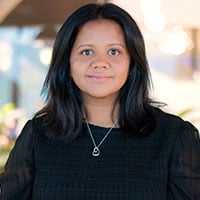
Mansi [00:00:08] Hello Stuart and welcome to the Rise of the COO podcast.
Stuart [00:00:11] Thank you for having me here today.
Mansi [00:00:13] It's great to have you here. We love to explore in this podcast that fascinating role of the COO, which we class as one of the most complex and interesting roles in business today. So really looking forward to hearing your insights. Me too. Now today's hot topic is COOs as translators, by which we don't mean necessarily the language of the CIO, but the ideas, how to take those ideas and translate them both into the boardroom and into the exec board, as well as the front line. So I'm looking forward to hearing some of your experiences in that space. Before we deep dive into all of that, of course, it'd be wonderful to hear a little bit about your career journey, which I know is slightly atypical, different to the typical COO. So let's pause there and perhaps let you give us an insight into that.
Stuart [00:01:00] Well, you know, I'd take the whole time if I talk about everything that I've done. But so now I'm the CEO of the UK and Ireland for Dentsum, which is a marketing communications business. But I've done so many roles beforehand. So it started off at Rolls-Royce Aerospace, working out how to do global logistics to make an engine in 40 days, then moved into kind of the marketing communications business, you name it, the agency side, where actually my very first job was Alexander Orlov, if you remember, from Compared the Market on Twitter, when Twitter was Twitter. But I've kind of done so many roles as a digital strategist, really, sort of helping both people within the agency and also clients understand about this new world of digital as it was back then, you know, when banners were a new thing. But then I kind of moved around, had sort of client leadership roles, I moved to states and help set up an innovation business helping the likes of Google and Ponna Ricard do innovation labs around sort of marketing, I did consultancy for quite a while. There's actually a clear ice machine out there in the market that's reasonably priced that I helped put there. I was for product development but then moved back to the UK and that's kind of when I started doing sort of more kind of operations roles I would say. So I did kind of global operations for global clients for a large network, which was. One about understanding what we did everywhere in the world, but also what our business needs to look like in the future. And then developing the products and services that we would help support our clients with into the future, then into the transforming of agency sets to deliver against that vision. And then finally sort of into this role of CEO. So not a traditional journey, but a fun one, I would say.
Mansi [00:02:52] Sounds very fun. Now, I'm trying not to be alarmed about an engine being created in 40 days, but I obviously know that you've lived abroad so you've got onto those planes yourself so I'm going to feel very relaxed about that. So obviously today's topic is about COOs as translators. What does that mean to you in practice?
Stuart [00:03:11] It's such a broad job and I think you know in operations we sort of run the business, grow it, transform it and then govern it. So you know it's such a broader spectrum and for many of us you know it's all of the business functions, it's any of the business units so everyone's quite different. So I think our First job is... I think as kind of like the babel fish, it is being able to understand the language, you know, and it is nuanced language, finance does talk quite differently to HR, you know, in the creative industries that I'm in, the media folk talk quite different to the technology platform developers. So it's being understanding what they're trying to say, and then being able too, sort of translate that for yourself and them. So that's kind of part one. And then the other one, perhaps even more important is how do you take the vision, the ideas, and translate them into sort of operational strategies that then land the plane, and that means that we are doing the things we want to do, hitting the impact we want make in a way that everyone can understand, and then translating that back to the executives so they can understand how their vision is going to life.
Mansi [00:04:20] And have you got some examples where that's worked really well?
Stuart [00:04:24] Oh, I would hope so.
Mansi [00:04:26] I know you will have of course though.
Stuart [00:04:27] So no, do you know what, I think the connected to my current role, you know, there was a big time where there was nine different business units and we're having to bring them into one and that's ways of working, it's brands, it is cultures and really it was trying to understand everybody's perspective in that but then creating something new that they could all get behind and roll out as a business. So I think kind of took about two years. You know, these aren't short activities, no transformation ever is. I just want to play the more recent ones.
Mansi [00:05:00] Yeah, it's lovely to hear that. That time period of two years, I think that's where often people wonder is it going to happen and lose patience. I think holding that patience in your particular role as COO is so important to keep people motivated, keep them believing in the end result, the end north star that's been set as well.
Stuart [00:05:18] I'm also reasonably impatient as well, so there's a little bit of both.
Mansi [00:05:23] Now the COO is often seen as a technical or process heavy role. Tell me a little bit about how you bring both personality and authenticity into it.
Stuart [00:05:34] Oh, that's a good question. I think the, do you know what, for me, first of all, be a person, not the role. No one really cares that you're COO. Yes. Like they care that you should do. Mm-hmm. So, you know, and there is a- I'm sure you-
Speaker 3 [00:05:47] You can.
Stuart [00:05:49] But you know, it's the, when they're coming to you, there's always something, it's like nervousness if you're perhaps a little bit more senior. It's just making people feel comfortable. So that's a big part of what I try and spend my time doing, especially when I'm meeting people for the first time is poverty. You know, I just make people feel sort of comfortable within it. And also I think the other bit that I try and do is like tell stories. I grew up in the communications business, so it is telling stories so people can connect with what you're saying and share a little bit about yourself. This is where I've done something that's kind of gone well. This is why I've something that has not gone so well, and it's when you're human. I think the more you can do that, that will connect with people more so than your ability to sort new processes or transform a part of a business.
Mansi [00:06:41] Yeah, storytelling is such a key part of business today, that in my experience with so many organizations I walk into, I see that as one of the missing bridges with where organizations are trying to get to and to really connect with their people. Now you gave us a wonderful story about where it has worked. I would love to just hear a few examples perhaps of where has it not worked as planned or intended in terms of bringing people on board.
Stuart [00:07:06] I have a pivotal story in my career where it was in a previous company and I was running a business development opportunity and it was across about 15 markets in that time. It was working for multiple brands and it was bringing together sort of data and media for a sort of future-facing CRM program, like big thinking, really exciting, lots of people involved and I was leading it. And we got to this point where we're trying to develop the solution and I'm trying to sell my solution to the rest of my own organization and it just wasn't landing. I was getting frustrated that it wasn't landing because I knew I was right.
Speaker 4 [00:07:54] I'm sorry.
Stuart [00:07:55] And we had this meeting, and it just ended in nothing, and everyone walked out, and like the pitch is in a few days, and I was like, we've got nothing to present. And my boss just sat me down, I was, like, being right doesn't always matter. I was just like, yeah, fair. And he was like you need to understand what their personal motivations are. Because these are people that run their own agencies, they're part of the business, they've got their personal motivation as well as their business ones, and you need to appreciate that. And go get some sleep because you're clearly tired. And I think there was a really humbling moment there when you're like, OK, actually, I can only be, you know, a great translator, communicator, leader when I'm at my best. So making sure that I'm looking after myself and get the rest so I can show up in my best way is really important. And also. It's not just about what you do, it's how you do it and how people react to it. And that's the real trigger for me. That's a real sort of change in my approach to like translating and sort of bringing people together in the future.
Mansi [00:08:59] If you wouldn't mind, I'll just deep dive into that for a moment because there's something really interesting about the moment you hear some of that feedback and then how long it takes to process and then make the change that I think our audience might find interesting if you're happy to share.
Stuart [00:09:13] Um, it always hits like a bullet, you know, feedback, you know, when you're like, you didn't do so well there, you know, especially when you do that kind of okay in my career and you're, like, oh, I do have to reflect. Um, and so it took a moment. I checked myself out. Um there's actually something I've, I've had a coach for a very long time and sort of I've like called the coach and so I've just talked through it. I'm, I, I process by talking. So, um, And I had to do it quickly. In that particular instance, you were pitching in a few days. So I had do it quick and I spoke to the coach and kind of just realized I had to be really humble and I had to go back to that group of people and kind of like hands up, I wasn't great then. Should we start again? And that's how I kind of made the switch and it had to be quick. I think it's not always like that, you know, you take a bit more time to process, you know, that was a moment in time I had to be quick, but it's the, it's something I always try to do relatively quickly, because you have to pivot, you're like, this worked or it didn't work, therefore we have to do something else. So I try to make those decisions that processing relatively quick, so you can start progressing again.
Mansi [00:10:24] Well I love how that's obviously stayed with you since that moment and certainly my interactions with you I can see how well you translate across different audiences and teams and maybe we'll touch on that for a moment. You mentioned earlier engaging with finance is very different to engaging with tech because their language can be quite different and very linked to their functional area. I'd love to just hear a little bit about how do you translate and talk to different audiences? How do you adapt your style and narrative for them?
Stuart [00:10:53] The style, I'd say, was pretty consistent, you know. I normally try and use quite simple language, you know, I'm a simple fellow, and I try and talk to everybody the same. And the personality, you know, my kind of leadership team get from me is the same as, you know, operations team get, or any other person in the business. I think there is a, the focus within the messaging changes. So the sitting in the boardroom, I get 15 minutes max, you have to be tight, you got to describe whatever I'm talking about, how does that translate to our overall strategy and help deliver it? What KPIs am I hitting? For the people I know need to make the decisions, how is it going to impact them? It's really, really, really pointed. I think with my own team, they're normally longer conversations. I have more time with them. I explain the rationale a lot more because I think they need to understand it to be able to activate it. And then we're like other sort of wider departments, you know, technology and IT sort of falls into my wider remit. It's trying to translate into them. Okay, what's going to be important to you? What are your KPIs? How is this going to help meet those? What's your perspective on this? And then kind of asking them a lot of questions so I can help answer those questions and understand how I'm going to deliver against whatever project or initiative it is.
Mansi [00:12:17] Your role is so busy, there's something going on in every moment of every day, both from the market within your own business. How do you carve out the time to find the time, to think about those messages for those audiences? Where do you find time for you to get the job right?
Stuart [00:12:32] Is planned. I'm in operations. I make time before every session I'm going into. I don't mean like before, normally a little bit in advance if I can, you know, a day or so, to be like, what do I need from them and what do they need from me? And the latter is normally probably the most important bit. And so I'm showing up with the information or perspective that I think people are going to want and you just have to make time for it and be that, you know. In the commute, you know, in the morning or actually carving out time in my calendar to be like, that is when I'm doing my thinking time. I also, every week, Friday mornings with a cup of coffee, 10am, I sit down and I reflect on the week that went for half an hour. However, quickly I finish my coffee and it's religious for me because if I don't do it, I feel out of whack the next week.
Mansi [00:13:24] What a great discipline. Now I heard all of the effort and energy you put into around the planning, the thinking about how to land messages well. I'm gonna just ask perhaps from the other angle, which is how do you make sure they actually have landed well?
Stuart [00:13:38] Interesting. So, um, once again, depends on the audience. And I think the, with my team, you know, it's a broad and many operations. It's a broad team, the property versus business operations, technology, quite different. They want different things. I think I spend the time to discuss the strategy. I was like, this is what our overall business is doing. And this is your role within it. So I do that the beginning. Ashi. It in December for the beginning of this year but you know every year everyone knows their role and whatever we're trying to achieve and I really ask them to go write their own like delivery plans for it and so I enable them to like what does this mean for me and then I make sure they review it all together so it's just not me reviewing it it has to work across all parts of operations and then I am sure that they do it with business unit they're working for or supporting or one of the other sort of business functions and i think it's that collaboration i mean that's what operations is it's collaborations it's the glue amongst everybody so to land the message it's more about the conversations spending time together and making sure that they are spending the time to think about what other people want from them, like we are here to, in service of the business, and that's their role.
Mansi [00:14:58] Your skills and gift in being such a great translator has a huge impact on your organization. But it's a big organization. You've touched on there just how you really think about your teams and you empower them. How do you upskill them to be as good translators as you are so that once you've done the messaging, it's reinforced through the rest of the organization through your teams?
Stuart [00:15:19] I love coming on this podcast, so many compliments, so thank you, look, I think there is a, you spend time with people, so I think it goes back to empowering them, if they really understand what their plans are and how that works for the rest of the business, because of the conversations they're having, they're already equipped to be able to understand what other people want, and it's like, one is just enabling spending time with other and different departments in different areas. But also, I actually spend quite a bit of time with, you know, my HR partner, working on what type of training do sort of individuals need and what do they collectively need. And for me, it's things like negotiation. A lot of it is what actually is negotiating. It's what does influence look like in the business? Yes, there are technical skills that they'll need, but those... What often seems softer skills are the ones that I spend a lot of time really making sure they've got the right training and additional support on to make sure that they can weave those into what is a complex business and a complex role to run within the business.
Mansi [00:16:24] I think that's so important, that soft skills is such a key focus and feature, particularly with how fast technology is moving, how fast AI is moving as well. Now, if you were to give some advice to a future aspiring COO, what would that be?
Stuart [00:16:42] So I always get the same advice, and the first is do not listen to me.
Mansi [00:16:46] Okay, all right.
Stuart [00:16:48] And I think that in operations, operations mean so many different things to different businesses or people. So it's about showing up with your, like, what's your superpower or superpowers? And the best way to get those is to really under yourself. So I talked about early about the coach, I've had one for years, you know, they're buried. But like, if you can get your business to pay for one, great. If you can afford it and the business won't pay. Do invest in yourself, because if you can work out what your superpower is, you can take that anywhere. And that doesn't matter if you've got a strategic operation role or you've got quite a structured process orientated one, or if it's a small business or a large business, you will show up in your best possible way.
Mansi [00:17:32] Great, I love that. And I love the power to become a COO is so much in the gift of really unlocking your superpower there as well. I think that's such a lost piece of advice, or lost idea within people. There's often such a desire to impart, rather than understand how do you unlock the talent from within that might already exist in someone.
Stuart [00:17:52] You know, I was never going to be a COO. I didn't know what I was going to be, but you know, I was going to be someone in business, you know. But, you know, my sort of stranger meandering career, I picked up skills that, oh, that works quite well for operations. Yes. And I was actually a coach that eventually said, have you ever considered this?
Stuart [00:18:09] I'll go try it out and, you know, and I was like, Oh, this is my home. This is where I should be. This is why I can thrive. So yeah, like, you don't have a destination in mind, just, you know, kind of have a, a general career and make it fun. Yeah, I enjoy doing this and it's not always enjoyable, but I enjoy it. And so I think there is, you have to do the things that you enjoy and find what you're really good at, and then you can go be brilliant.
Mansi [00:18:34] Great. Stuart, what an incredible conversation today. I've just loved spending time with you for so many different reasons, both the insights that you've imparted, but actually just the the human way in which you operate as a COO from the pouring the tea. I'm going to hold on to that and look around for all the people that are pouring the tea because it will tell me something about them, through to everything that's actually equipped you to have the role today and the way you translate across your organization. It's really wonderful to see and it's been absolutely fascinating to hear both your experiences, both the good and the bad and what you've learned, but also the confidence you've just given to anyone out there who's an aspiring COO, in terms of how to think about their own talent from within and to enjoy the journey along the way as well. So thank you so much for joining us. Time flies quickly on these, but it's been a fantastic conversation. And I've really enjoyed our time together and perhaps I'll help pour some coffee for you as well
Stuart [00:19:27] I love that, thank you.
Mansi [00:19:28] Brilliant, thank you.