
Be bold and back your core
5 min read 22 September 2026
What we heard at QSR Evolution 2026, and what our consumer and macroeconomic analysis tells us about where the next wave of QSR growth will come from.
We spent two days at QSR Evolution in Atlanta listening to CEOs from some of the industry’s best-known brands talk candidly about what worked, what didn’t, and the choices they’re making about the future. Set alongside our own consumer and macroeconomic analysis, one theme came through more strongly than any other: the next source of growth for most QSR brands sits inside the core business, and the instinct to go looking for it elsewhere is usually the more expensive option.
Here is what we heard and what the data says.
The consumer is still spending. The national average has stopped being useful.
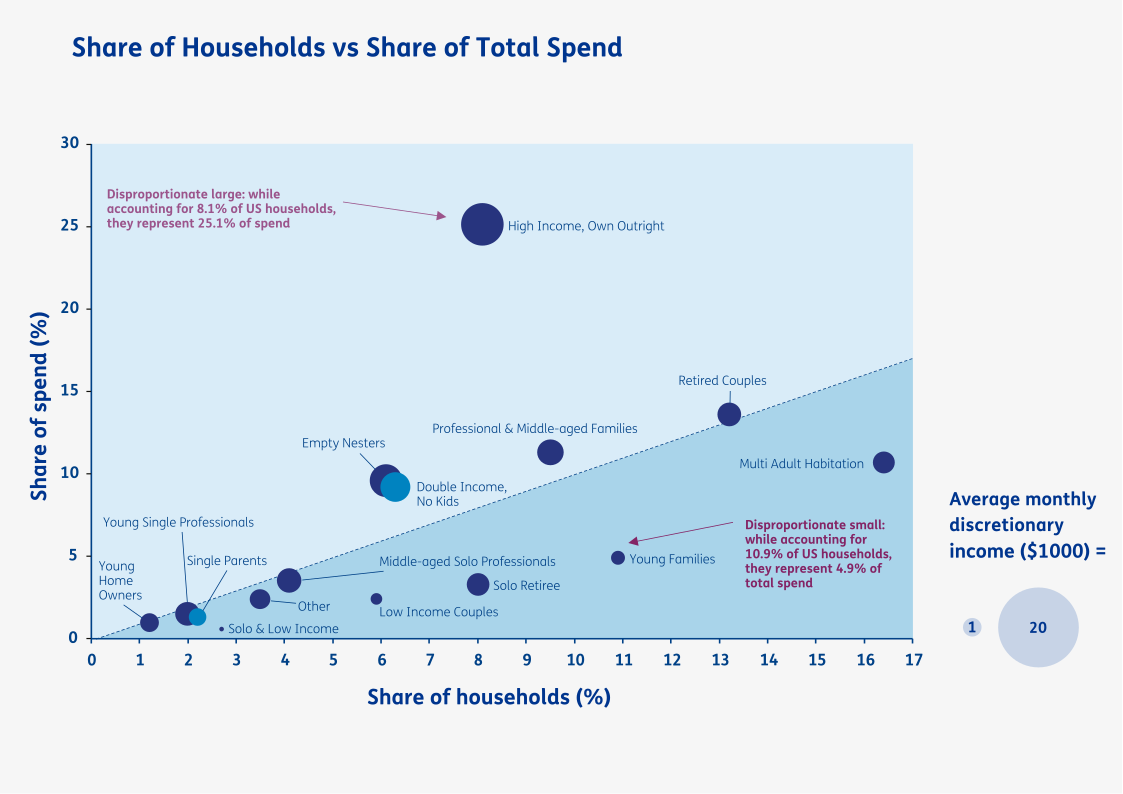
Our US consumer spending outlook points to spending growth of around 2.2% in a stable scenario, slowing to roughly 1.8%, 0.9% and 0.3% as cost pressures build. The headline stays positive in every case. The margin for error narrows quickly. What matters for QSR is where that spend sits. Spending power has concentrated sharply: one high-income segment accounts for 8.1% of US households but 25.1% of all consumer spend, while one lower-income segment makes up 10.9% of households and just 4.9% of spend. That gap explains something operators keep describing as contradictory in the P&L. Revenue holds up better than transactions. Higher-income guests are still buying the premium item, the beverage, the delivery order. More constrained guests are visiting less often. National planning will not tell you which stores are seeing it.
Spending power is increasingly concentrated among a small group of affluent households.
Source: Baringa US Consumer Spending Outlook Q2 2026
Income changes the size of the order, not the reason for the visit
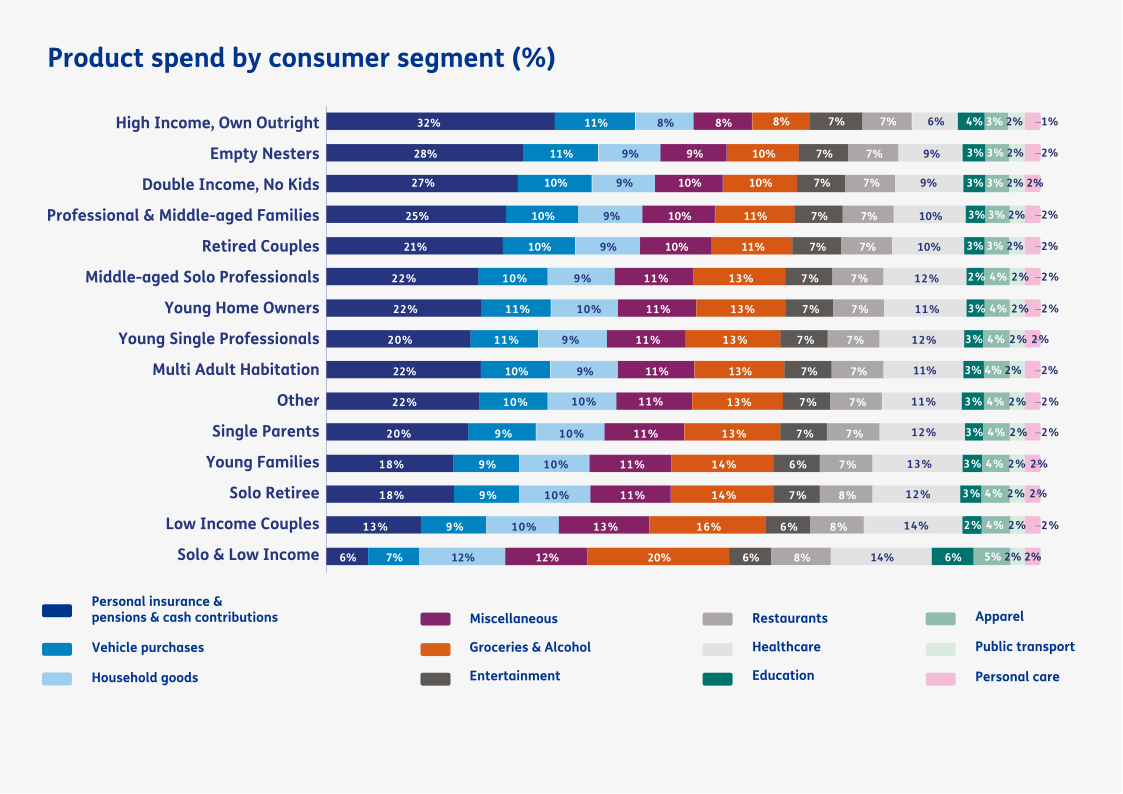
One of the most useful findings in our analysis is also the least dramatic. Households across income groups spend on broadly the same categories. Higher-income households simply have more headroom and spend more across the board, with the difference showing up at the margin in discretionary areas including eating out. Read that as a menu strategy and it is quite liberating. Your constrained guest and your affluent guest want the same things from you: speed, consistency, familiarity, and food that feels worth what they paid. They differ on how much they can spend per occasion. That is a ladder problem within your existing menu, not a signal to go and buy a different business.
Win share of wallet inside the core, rather than chase category switching
The mechanism we would point QSR leaders to is price and format architecture: tiering the same core product lines across price points, portions, and channels rather than pursuing new categories. Smaller value formats to keep constrained guests inside the brand. Bundles that protect margin while reading as genuine value. Premium builds of the flagship for guests with headroom. App and delivery are treated as separate rungs on the ladder rather than as a discount channel. The sharper version is to look at how the next dollar of household income gets allocated, by segment, and prioritise menu innovation and promotional spend accordingly, rather than assuming every guest responds to income changes the same way. Most QSR loyalty datasets can already answer that question. Very few are being asked it.
Product spend by consumer segment: the opportunity is to offer the same core product in ways that reflect how much different guests can spend.
Source: Baringa US Consumer Spending Outlook Q2 2026
Eating out gets reassessed first, so make the meal harder to cut
Our modelling is blunt about sequencing. Restaurants, apparel, recreation and vehicle purchases see the sharpest slowdown as cost pressures rise and households protect essentials. QSR sits in the first line of fire. The competition is also broader than the competitor down the road: affordable indulgences and cheaper stand-ins for a night out, the home-cooked "fake-away" included, absorb a meaningful share of the treat spending guests are willing to part with.
Discounting deeper is the obvious answer and usually the wrong one, particularly in franchise-heavy systems where the margin consequence lands on the operator. The better defence is making the occasion indefensible to skip: speed, portion, taste, consistency, and menu news worth travelling for. That makes the conference’s most consistent operational message even more important: protect the flagship product.
The flagship product is the growth engine, and underinvestment shows
Burger King, Krispy Kreme, Shake Shack and White Castle were all brands represented on stage that had a flagship product at the centre of their growth stories. And each of them described, with some honesty, what happened if cost was quietly taken out of that product. Sales fell. Not the marketing budget, not the estate. The product itself.
Set that against the consumer picture and the logic is clear. If affluent guests are carrying a disproportionate share of your revenue, the flagship is what keeps them coming. If constrained guests are rationing visits, the flagship is a reason to return. Degrading it to protect a few points of food cost damages the one thing both affluent and constrained guests value. The leaders who had been through a genuine turnaround were explicit that authenticity, ingredient quality and consistency of service were what they defended first and cut last.
Geography now beats the national plan
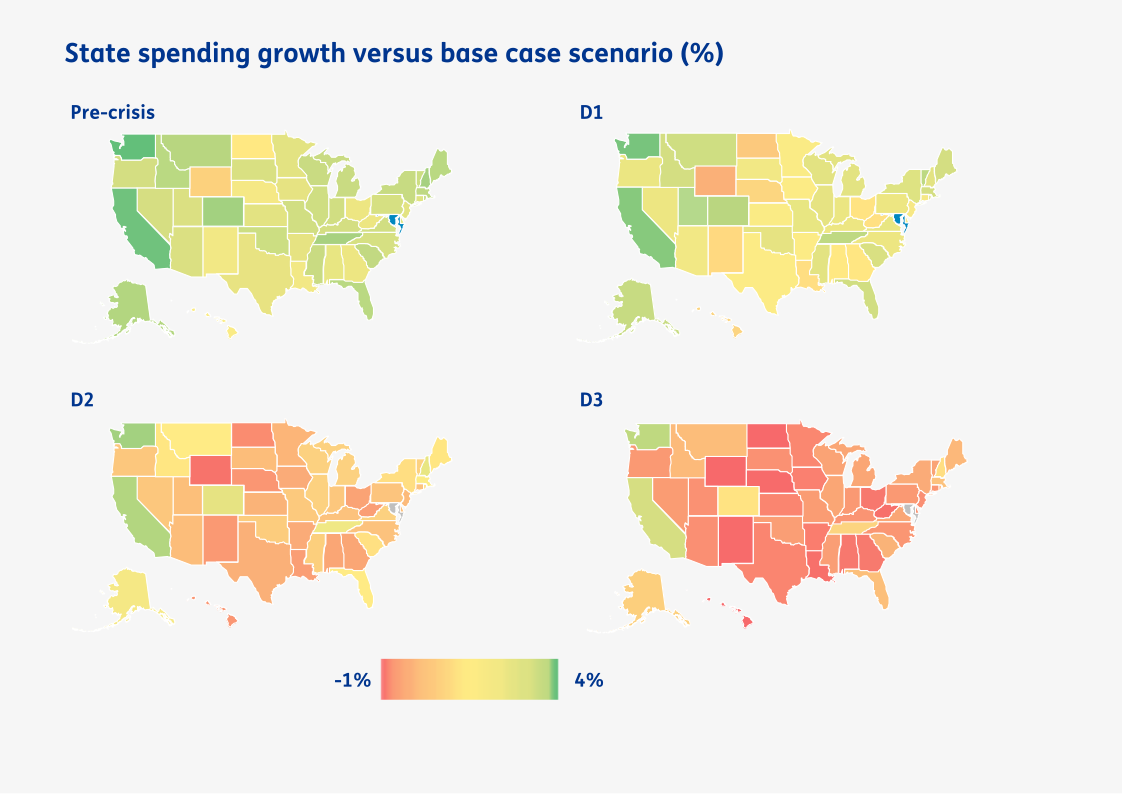
Geography, life stage and housing tenure matter more than the national average. Major metros show stronger spending growth, while renters, younger households, lower-income households and some non-metro and micropolitan areas are under materially greater strain. Fuel is the mechanism that moves fastest. Fuel is the cost driver that changes most as conditions deteriorate. For QSR operators, rising fuel costs can mean fewer impulse visits, more consolidated trips, greater emphasis on proximity and drive-thru, and closer scrutiny of delivery fees. Very few brands incorporate fuel prices anywhere near their traffic forecasts. They should.
US spending growth masks widening differences between local markets
Source: Baringa US Consumer Spending Outlook Q2 2026
And the window is open now
Downside risks have moderated rather than disappeared. Consumer spending expectations have improved as fuel costs and inflation pressures have eased, and the US consumer remains materially more resilient than the UK, where confidence has rebounded but from a weak base. Many competitors will remain cautious after successive crises. For QSR brands, this is the time to be bold and back the core: invest in the flagship products, menu innovation and guest experience that already set the brand apart, and make sure the supply chain can meet demand if it comes in stronger than planned.
Missing the sale is the expensive outcome, not the discount. The caveat every operator offered is worth repeating. Rome wasn't built in a day. Each of them needed time to reset the strategy, mobilise it and then execute it, and none of them found a fast track. The brands that will look clever in eighteen months are the ones deciding now which parts of the core to invest in, and resisting the urge to chase growth somewhere they have never earned the right to compete.
Our Experts


Related Insights

Supply chain is the licence to grow
As QSR brands expand, supply chain capability is emerging as a key driver of profitable growth, operational consistency, and franchise success.
Read more
The AI-Powered Integration Office
Discover how AI is transforming M&A integration, helping consumer goods businesses accelerate value delivery, reduce risk and improve decision-making.
Read more
UK consumer spending outlook H2 2026
UK consumer spending is proving more resilient than expected, but growth is increasingly concentrated among affluent households. Discover who is spending and who is not.
Read more
Horizons Series: Insights for Navigating What's Next
Explore Baringa's Horizons Series for expert analysis on economic shifts, consumer trends, energy markets, and strategic planning
Read moreIs digital and AI delivering what your business needs?
Digital and AI can solve your toughest challenges and elevate your business performance. But success isn’t always straightforward. Where can you unlock opportunity? And what does it take to set the foundation for lasting success?
 Latest Consumer Products and Retail insights
 Exclusive interviews
 Actionable strategies